The Best Charging Cables That Survive More Than Six Months
Most cables fail at the connector, not the braid. We compare strain relief, power ratings and connector design to find cables worth keeping.
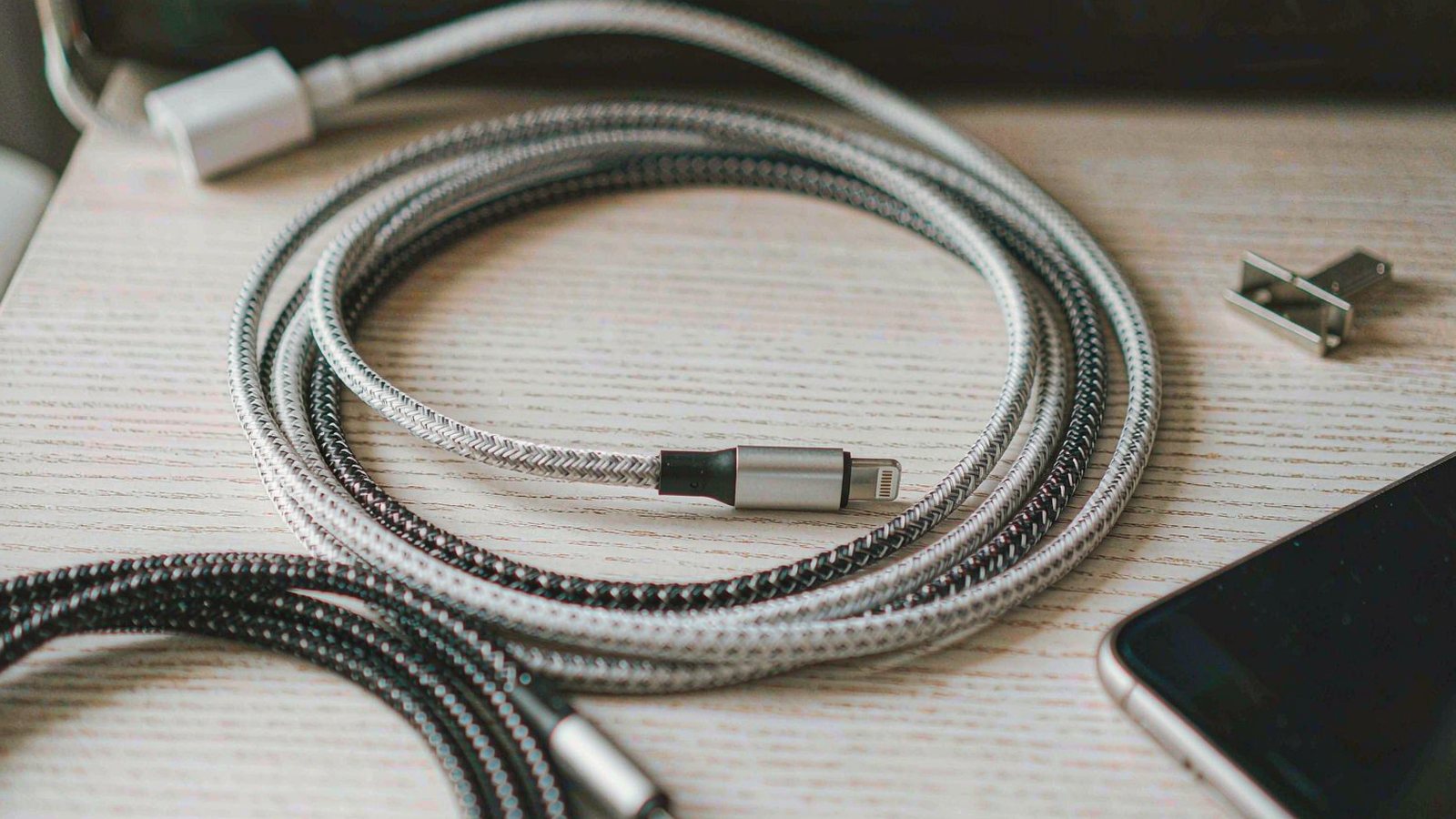
Top picks at a glance
Tap any pick to jump to the full breakdown, or use the link to check the current price.
| Pick | Best for | Check price |
|---|---|---|
| Anker 765 USB-C to USB-C Cable Best overall | Charging laptops and phones from a high wattage charger without worrying about the cable | Check price |
| Nomad Kevlar USB-C Cable Best build quality | Anyone who has gone through several cables in a year and wants that to stop | Check price |
| Apple USB-C Charge Cable (2 m) Best length for bedside use | Charging from a socket that is further from the bed or sofa than a short cable allows | Check price |
| Belkin BoostCharge Braided USB-C to Lightning Cable Best for older iPhones | Older iPhones and iPads that use the Lightning connector | Check price |
| UGREEN USB-C Cable Best budget pick | Buying several cables at once for different rooms, bags and desks | Check price |
| Native Union Belt Cable Best for tidy desks and travel | People who travel with a cable and are tired of untangling it in a bag | Check price |
Charging cables are the cheapest object in your bag and the one that fails most often. The strange part is that the marketing focuses on the least important variable. Braided jackets, woven patterns and colour options are all visible; the joint where the cable meets the plug is the part that breaks, and it is the part most manufacturers spend the least on.
The good news is that the difference between a cable that lasts three months and one that lasts three years is not price. It is design, and it is visible if you know what to look at.
Why cables fail, and where
The joint, not the jacket
Nearly every cable failure happens at the strain relief, the short section where the wire leaves the rigid connector housing. That is where bending concentrates, and it is where the conductors inside eventually crack. A long, flexible strain relief spreads the bend across a longer section and dramatically extends the cable’s life. A short, hard one concentrates the stress at a single point.
This is why a plain cable with good strain relief can easily outlast a braided one with a poor joint.
Connector style and how often you plug it in
A connector that is inserted and removed several times a day wears differently from one that stays in a laptop. The socket and the plug both wear, and a loose connector that wobbles is a sign of wear on one side or the other. If you charge in the same place every night, leaving the cable plugged in and unplugging the device end instead spreads the wear more evenly.
Wattage ratings and what they really tell you
The rating states the maximum power the cable is designed to carry. Exceeding it does not usually break anything, but it does mean heat, and heat is what ages insulation. A cable rated above what you need runs cooler and lasts longer. It also removes a hidden cause of slow charging, since a cable that cannot carry enough power will quietly limit the rate.
Data speed, which has nothing to do with charging
Many cables that charge quickly transfer data slowly, and some transfer no data at all. These are separate specifications and manufacturers do not always state both clearly. If you need to move files or connect a display, check the data rating separately rather than assuming a high charging rating implies fast data.
Length and voltage drop
Longer cables lose a little power over their length. A very long cable with a modest rating may charge more slowly than a short one with the same rating. If charging speed matters, keep the cable to a sensible length rather than buying the longest available.
What we would not pay extra for
- A woven colour pattern on a cheap joint. Aesthetics do not extend product life.
- Very high wattage ratings on a cable used for a phone. Useful for the future, never a priority now.
- Angled connectors unless you need one. Convenient in a car, awkward on a desk.
- Branded cable ties and organisers. A strip of hook and loop tape costs almost nothing.
- Cables bundled with a charger you did not choose. Often the cheapest component in the box.
Making any cable last longer
- Pull on the plug, never the cable. It sounds obvious and it is the single biggest cause of premature failure.
- Leave a service loop where the cable leaves a laptop, so nothing pulls at the connector.
- Avoid tight coils around a charger or a phone. Bend radius matters more than bending itself.
- Keep the connector clean. Pocket lint in a phone port causes intermittent charging that gets blamed on the cable.
- Do not wrap a cable around a hot charger. Heat plus bending is the worst combination.
- Retire cables at the first sign of intermittent contact. A cable that works at one angle is on its way out.
A quick word on cheap cables and safety
Most unbranded cables are fine and many are not. The risk is that a cable with poor construction can allow incorrect power negotiation and, at worst, heat where it should not be heating. Two practical checks are worth applying: buy from a brand that publishes its ratings at all, and touch the connector after half an hour of charging. Warm is normal; hot is not, and a hot connector should be replaced rather than monitored.
When to replace a cable immediately
Replace it if the connector housing is cracked, if the plug fits loosely enough to wobble, if it charges only at certain angles, if the outer jacket is split far enough to expose the inner wires, or if the connector is hot to the touch after charging. Any of those is a replacement rather than a repair, and cables are cheap enough that there is no sensible reason to keep using one.
How this guide was researched
We did not bend-test these cables or measure their resistance. This comparison is based on published specifications, manufacturer durability claims, warranty terms and consistent themes in long-term owner reports, particularly the intermittent charging and connector failures that appear after a few months of daily use. Where we describe durability, we are summarising patterns in owner experience rather than results from testing we performed ourselves. Cables are frequently revised without a name change, so treat the brand and design as indicative rather than a guarantee, and check the current price before buying.
Our picks in detail
Anker
01 Anker 765 USB-C to USB-C Cable
A high wattage cable with a nylon braid and, more importantly, a reinforced section where the cable meets the connector. That joint is where cables break, and it is where this one is strongest.
Best for: Charging laptops and phones from a high wattage charger without worrying about the cable
- High wattage rating suitable for charging laptops
- Nylon braided outer jacket
- Reinforced strain relief at both connectors
- USB-C connectors at both ends
Pros
- Handles laptop-level power, so it also charges phones and tablets
- Reinforced connector joints resist the usual failure point
- Braided jacket resists tangling and abrasion
Cons
- Firmer than a standard cable, which some people dislike at the connector
- Charges only, with no high speed data transfer
We may earn a commission from this link. Learn more.
Nomad
02 Nomad Kevlar USB-C Cable
A heavy-duty cable with Kevlar reinforcement and a thick jacket, built for people who destroy cables regularly. It is expensive for what it is, and it is the one most likely to still be in use in three years.
Best for: Anyone who has gone through several cables in a year and wants that to stop
- Kevlar reinforced internal construction
- Thick protective outer jacket
- Rated for a high number of bend cycles
- USB-C connections with a snug fit
Pros
- Extremely durable construction
- Snug connector fit that does not wobble loose
- Suits a cable that lives in a bag and gets abused
Cons
- Costs several times what a basic cable does
- Thicker and stiffer than most people need at a desk
We may earn a commission from this link. Learn more.
Apple
03 Apple USB-C Charge Cable (2 m)
A long, well-finished cable that works with any USB-C device. The white jacket shows dirt quickly and the strain relief is modest, so it is a good cable rather than a tough one.
Best for: Charging from a socket that is further from the bed or sofa than a short cable allows
- Two metre length for reaching distant sockets
- USB-C connectors at both ends
- Compatible with standard USB-C devices and chargers
- Plain white finish matching common accessories
Pros
- Genuine extra length without an extension
- Reliable connection with consistent charging behaviour
- Works with any device that uses USB-C
Cons
- Strain relief is modest, so heavy flexing wears it out
- Light coloured jacket marks easily
We may earn a commission from this link. Learn more.
Belkin
04 Belkin BoostCharge Braided USB-C to Lightning Cable
The pick for anyone still charging an iPhone with a Lightning port. The braided jacket and reinforced ends are a clear step up from the cable that came in the box.
Best for: Older iPhones and iPads that use the Lightning connector
- USB-C to Lightning connectors
- Braided outer jacket
- Reinforced connector housings
- Available in several lengths
Pros
- Noticeably more durable than the bundled cable
- Widely stocked, so a replacement is easy to find
- Supported fast charging for compatible devices
Cons
- Lightning is being phased out, so the useful life is limited
- Costs more than a basic cable of the same length
We may earn a commission from this link. Learn more.
UGREEN
05 UGREEN USB-C Cable
An inexpensive braided cable with a sensible power rating and a decent connector. It is not built to outlast a premium cable, and at the price it does not have to be.
Best for: Buying several cables at once for different rooms, bags and desks
- USB-C to USB-C with a high wattage charging rating
- Braided nylon jacket
- Available in several lengths and multi-packs
- Aluminium connector housings
Pros
- Very low price, particularly in multi-packs
- Handles fast charging for phones and many laptops
- Braided jacket is unusual at this price
Cons
- Strain relief is thinner than the premium cables
- Quality varies between batches according to owner reports
We may earn a commission from this link. Learn more.
Native Union
06 Native Union Belt Cable
A cable with an integrated leather strap that keeps it coiled without a separate tie. The design is the point, and you are paying for it rather than for electrical performance.
Best for: People who travel with a cable and are tired of untangling it in a bag
- Integrated strap for coiling the cable
- Braided or fabric jacket depending on the version
- Reinforced connector housings
- Available in several connector types
Pros
- Stays tidy without a separate cable tie
- Good build quality and connectors
- Pleasant to handle and looks deliberate on a desk
Cons
- Expensive for the electrical performance on offer
- The strap is a wear point if it is used constantly
We may earn a commission from this link. Learn more.
The bottom line
Our verdict
For most people, the Anker 765 is the right single cable to buy: it handles laptop power, so it works with everything you own, and the reinforced joints address the failure point that actually matters. If you keep destroying cables, pay for the Kevlar option and stop replacing them. The Apple cable earns its place purely on length, and the Belkin is the sensible choice if you still have a Lightning device, with the caveat that the connector is on its way out. Buy the UGREEN in a multi-pack for bags and spare rooms, and the Native Union only if the strap is something you will genuinely use every day.
Frequently asked questions
Should I buy a braided cable?
Braiding helps with abrasion and tangling, and it is pleasant to handle, but it does not protect the most common failure point, which is the joint where the cable enters the connector. A well-designed plastic cable with good strain relief will outlast a braided cable with a weak joint. Look at both.
Can a cheap cable damage my device?
A cable that does not meet the relevant standards can, in principle, allow incorrect power negotiation, and extremely cheap unbranded cables are a genuine risk to expensive hardware. Buy from established brands with published ratings, and treat a cable that gets unusually hot as one to stop using immediately.
What do the wattage numbers on cables mean?
They indicate the maximum power the cable is designed to carry. A cable rated well above what your device draws is fine and will simply run cooler. A cable rated below what your charger can output will limit charging speed, usually without any warning, which is why a slow charge is often the cable rather than the charger.
Why did my cable stop working suddenly?
Cables usually fail progressively rather than instantly. The common sequence is intermittent charging, then a position that works and others that do not, then nothing. That pattern points to a broken conductor inside the connector joint. Cables that fail at a fixed angle have effectively told you what happened.
Sources & further reading
- Anker cables — official product and specification pages
- Belkin charging cables — official product pages
- UGREEN cables — official product pages
Facts and availability last checked September 15, 2026.
Keep going
Related guides
 Tech
Tech The Best Noise-Cancelling Headphones for Commuters and Open Offices
We compared over-ear noise-cancelling headphones on published specs, comfort for long wear, call quality and warranty cover — plus which models to skip and why.
 Tech
Tech The Best Robot Vacuums for Homes With Pets and Constant Hair
Pet hair is the hardest test for a robot vacuum. We compare brush designs, self-emptying bases and navigation to find the ones that cope with real animals.
 Tech
Tech The Best Laptops for College Students Who Don't Want to Replace Them in Two Years
A student laptop should survive four years, not two. We compare repairability, battery, keyboard and support policies instead of benchmark charts.