How to Shop Vintage and Thrift for Real Streetwear
A practical guide to dating, judging and buying vintage clothing, from tag eras and stitching to sizing, fakes and what is not worth hunting.
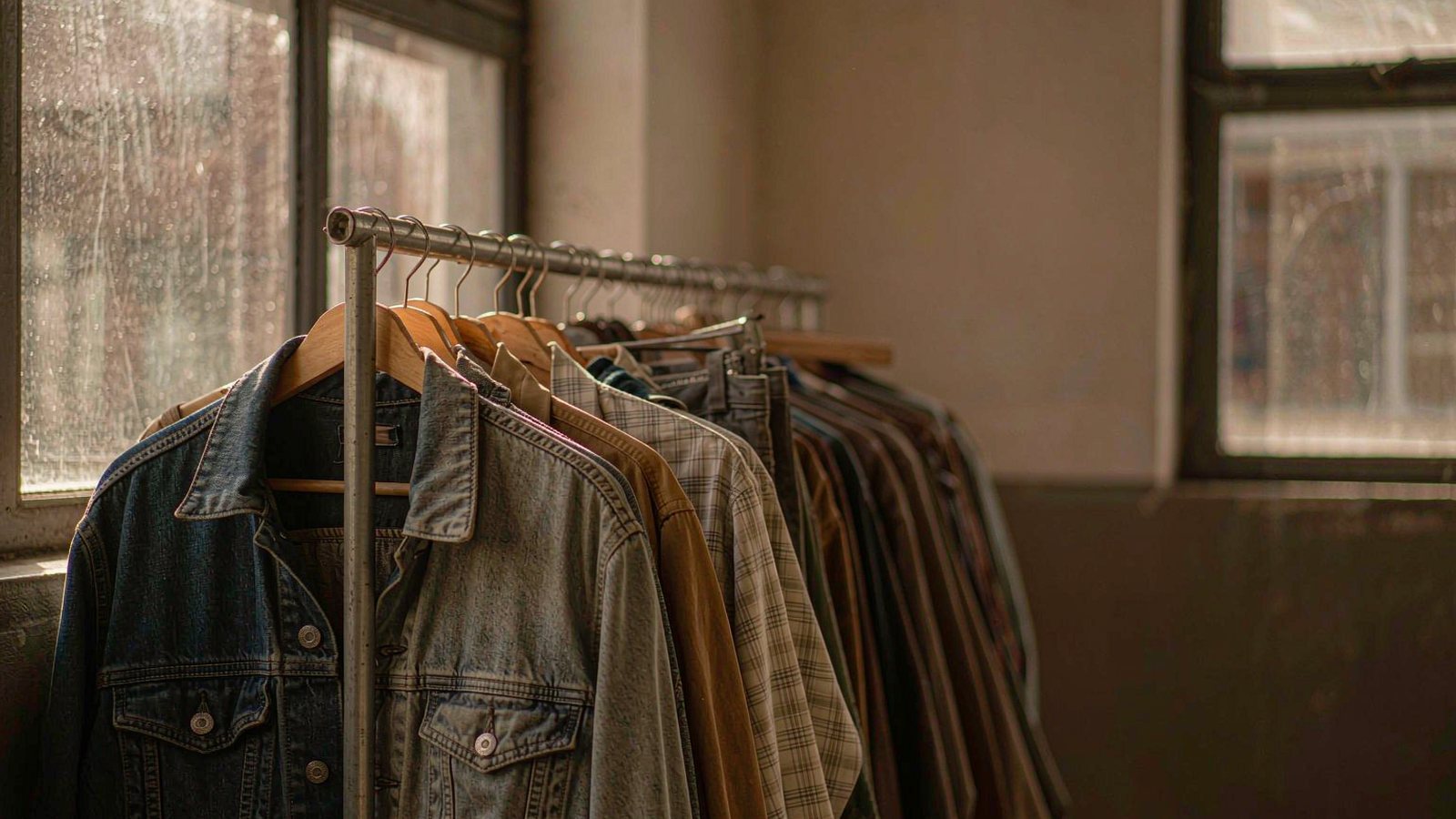
Top picks at a glance
Tap any pick to jump to the full breakdown, or use the link to check the current price.
| Pick | Best for | Check price |
|---|---|---|
| Vintage Levi's 501 Jeans Best starting point | Learning how to date and judge vintage clothing with a garment you can find anywhere | Check price |
| Vintage Carhartt Detroit Jacket Best workwear find | A durable outer layer with real patina that improves with age | Check price |
| Vintage Champion Reverse Weave Sweatshirt Best sweatshirt | A genuinely heavy sweatshirt with a worn-in look you cannot buy new | Check price |
| Vintage Patagonia Fleece Best outdoor vintage | Real warmth from a fleece with a documented construction history | Check price |
| Vintage Polo Ralph Lauren Best of the preppy revival | Knitwear and shirts with a heavier hand than modern versions | Check price |
| Surplus M-65 Field Jacket Best cheap entry | Cheap, genuinely durable outerwear and learning to read garment labels | Check price |
Vintage clothing is the only part of streetwear where the buyer has more information than the seller, if they have done the reading. A garment’s label, its stitching, its zips and the way the fabric has aged are all evidence, and most of them survive decades.
That is also why the category has become harder and more expensive. Once enough people learn the tell marks, the arbitrage closes, and the difference between a genuine find and an overpriced one shrinks to whatever you can judge in thirty seconds. Learning those thirty seconds is the whole exercise.
Learn to date a garment before you buy it
Tags, labels and stitching
The care label is the fastest dating tool. Fibre content and washing instructions only became standard in the 1960s and 1970s, and the way they are printed has changed repeatedly since. A woven label sewn into a seam is generally older than a printed tag heat-sealed into the inside of the neck.
Seams are the second tool. Single-stitch construction, where a seam has one visible line of thread on the outside, generally points to older production, because double-stitching became standard as industrial sewing got faster and cheaper. That said, this is a tendency rather than a rule, and good modern garments still use single-stitch in places.
Also look at the seams themselves: an overlocked edge inside the garment indicates a modern manufacturing standard, because older mass-market production usually used a simpler finish.
Zips and hardware
Zips have makers’ marks and decades. Talon, Scovill and other historic American makers appear on older garments, and their presence is a reasonable dating clue for mid-century workwear and denim. YKK is Japanese and appears widely from the 1970s onward. Metal zip pulls, versus plastic, are another signal.
Buttons tell you about age and quality too. Metal buttons, branded snaps and rivets at pocket corners all indicate a garment that was built to be repaired rather than replaced.
Fabric checks you can do in ten seconds
Run a hand over the fabric and check for thinning at the elbows, the collar, the seat and the knees, which are the four places garments wear first. Hold it up to light and look for pinholes, which indicate dry rot in old cotton and moth damage in wool. Check the hem and cuffs for fraying and dead elastic.
Smell it. A musty or smoky smell often comes out with a wash, but a chemical smell or a persistent damp smell is much harder to remove and is a reason to walk away.
Sizing: measure, do not trust the label
Vintage sizing is the single most expensive mistake in the category. Garments were cut differently decades ago, they were sized inconsistently between factories, and every wash since has changed them again. A labelled 34 waist can measure between 30 and 36 inches depending on the garment’s history.
Buy on centimetres. Ask the seller for waist, inseam, chest and shoulder measurements taken flat, and compare them against a garment you already own that fits. If a seller will not provide measurements, treat that as the answer.
Shrinkage matters too: heavy cotton that has been washed hot will have shrunk mostly in the length, so a vintage small can be shorter than a modern small even when it is wider.
What vintage is not worth buying
Basic cotton t-shirts are rarely worth it. Modern blanks are cheap, consistent and better made, and old basic tees are usually thin and misshapen.
Anything sold as “vintage style” but made last year. Distressed finishes on new garments are a durability problem dressed up as authenticity.
Trend pieces in extreme silhouettes. If the only reason you want it is that it matches what everyone is wearing right now, the resale value will fall with the trend.
Anything requiring specialist cleaning you will not do. A dry-clean-only wool coat that you wash at home is a ruined coat.
Heavily branded pieces without provenance. The more a logo adds to the price, the more likely the garment is fake, and vintage branding is no protection.
Where to look beyond the thrift store
Thrift chains have raised prices as secondhand became fashionable, and the good pieces often never reach the rack. Estate sales and local classified listings still produce the best value because the seller is clearing a house rather than pricing to a market. Consignment shops filter for condition and charge accordingly, which is a reasonable trade if you value your time. Resale platforms offer measurements and photographs, and charge a premium for the convenience.
Buying used outdoor gear through a brand’s own resale channel is worth knowing about, because those programmes usually grade condition and stand behind the item, which removes most of the risk.
A note on how this guide was put together
This guide is based on documented dating markers, published care and material information, and consistent themes in long-term owner and resale reports across the category. We did not authenticate any specific garment or inspect inventory ourselves, and dating markers are tendencies rather than guarantees, because manufacturers overlapped eras and changed suppliers constantly.
Prices in this market move faster than almost any other, so we do not quote figures. Check the current price against sold comparisons rather than asking prices, and buy from sellers who publish measurements and accept returns.
Our picks in detail
Levi's
01 Vintage Levi's 501 Jeans
The most abundant genuinely good vintage garment in the world, with dating marks that are well documented and easy to learn. The catch is that sizing is unreliable, because decades of washing change the measurements.
Best for: Learning how to date and judge vintage clothing with a garment you can find anywhere
- Heavyweight rigid cotton denim in earlier production years
- Button fly with the original five-pocket layout
- Dating cues including red tab style, arcuate stitching and care labels
- Straight leg with a mid rise
Pros
- Dating information is widely documented and easy to learn
- Older denim is usually heavier and fades better than modern equivalents
- Any tailor can repair them, which extends the life further
Cons
- Measurements have usually changed from the original size
- Non-stretch denim is uncomfortable until it is broken in
- Popular sizes carry inflated prices on resale platforms
We may earn a commission from this link. Learn more.
Carhartt
02 Vintage Carhartt Detroit Jacket
A heavy duck canvas jacket with a blanket lining that wears into something better than it started. Genuine older examples are increasingly expensive, which is the honest problem with recommending it.
Best for: A durable outer layer with real patina that improves with age
- Heavy cotton duck canvas with a blanket or quilted lining
- Corduroy collar and a zipped front with a storm flap
- Bartacked pockets and stress points
- Boxy, cropped workwear cut
Pros
- Canvas develops a genuine patina rather than wearing out
- Blanket lining is warm and holds up well
- Easy to repair with a patch
Cons
- Prices for good examples have risen sharply
- Old canvas can be stiff, faded or stained in ways you cannot fix
- Sizing was cut for layering, so it runs very large
We may earn a commission from this link. Learn more.
Champion
03 Vintage Champion Reverse Weave Sweatshirt
Older American-made Reverse Weave sweatshirts are denser and better built than the modern version, which is why they are hunted. The tradeoff is that heavy vintage cotton is often faded, thinned at the collar, or both.
Best for: A genuinely heavy sweatshirt with a worn-in look you cannot buy new
- Heavyweight fleece, often denser than current production
- Cross-grain cut body with side gussets
- Single-stitch or early double-stitch construction depending on era
- Vintage branding at the chest or sleeve
Pros
- Fabric density and hand are usually better than modern equivalents
- Worn-in look that is difficult to imitate convincingly
- Colour fade is even rather than patchy on good examples
Cons
- Collar and cuffs are usually the first thing to fail
- Pieces are often thinned at the elbows and hem
- Reproduction fakes exist and are common online
We may earn a commission from this link. Learn more.
Patagonia
04 Vintage Patagonia Fleece
Older Synchilla and pile fleeces are warmer and denser than most current production, and the brand's used-gear channel makes them easier to buy with some accountability. The honest problem is that synthetic fleece from any era still pills.
Best for: Real warmth from a fleece with a documented construction history
- High-loft recycled or virgin polyester pile
- Snap or zip placket depending on the model
- Elasticated cuffs and hem
- Vintage branding and colourways
Pros
- Older pile is often denser and warmer than current lightweight fleeces
- Some channels resell used gear with condition grading
- Still fully serviceable if the loft has not been flattened
Cons
- Pile flattens and pills with heavy wear
- Old elastic in cuffs and hems is usually dead
- Vintage colourways can be hard to wear
We may earn a commission from this link. Learn more.
Polo Ralph Lauren
05 Vintage Polo Ralph Lauren
Older Polo knitwear, rugby shirts and oxfords are widely available and often better made than current equivalents. The risk is that this is one of the most counterfeited brands in secondhand clothing.
Best for: Knitwear and shirts with a heavier hand than modern versions
- Heavier cotton knits and wovens in earlier production
- Embroidered pony logo at the chest
- Wide range of eras and sub-labels
- Classic American fit
Pros
- Fabric quality in older knits is often noticeably better
- Very common, so prices stay reasonable in most markets
- Styles that suit a range of outfits
Cons
- Extensively counterfeited, including on vintage labels
- Sizing shifted between eras and sub-labels
- Some colourways and cuts read very dated
We may earn a commission from this link. Learn more.
Military Surplus
06 Surplus M-65 Field Jacket
Genuine military surplus is often the cheapest way into a heavy, functional jacket, and the specification documents are usually still with the garment. The downside is that surplus sizing was designed for layering over equipment, so it is enormous.
Best for: Cheap, genuinely durable outerwear and learning to read garment labels
- Heavy cotton-nylon sateen shell with a removable liner on some issues
- Four bellows pockets with flap closures
- Nomenclature label with contract number and size
- Drawcords at the waist and hem
Pros
- Construction was specified to a standard rather than to a price point
- Labels are detailed, which makes dating and grading straightforward
- Often far cheaper than a fashion equivalent
Cons
- Sizing is extremely large and rarely matches civilian sizes
- Surplus conditions vary enormously, from unissued to heavily worn
- Some issues have repairs or unit markings that cannot be removed
We may earn a commission from this link. Learn more.
The bottom line
Our verdict
Start with vintage denim, because the dating marks are documented and the lessons transfer to everything else, and because a pair of 501s is the most useful garment you can find secondhand. Vintage workwear such as the Carhartt Detroit jacket is the best value in the category if you can find one at a fair price, but the market has caught on and prices reflect that. Genuine military surplus is the cheapest route to a heavy jacket, provided you can live with the sizing. Be cautious with heavily branded pieces, because counterfeiting is worst exactly where the logo adds the most resale value. Check the current price against what the garment actually is, not against what the brand name suggests.
Frequently asked questions
How do I tell if something is genuinely vintage?
Start with the label: fibre content, care instructions and country of manufacture date most garments to a broad era. Then check construction: single-stitch seams, older zip brands, and paper or woven rather than printed tags all point to older production. For denim specifically, the tab style, arcuate stitching and where the label was sewn are well documented.
Why does vintage sizing not match my normal size?
Two reasons. Garment blocks were cut differently decades ago, usually roomier and shorter, and almost every secondhand garment has been washed many times, which shrinks cotton and stretches knitwear. Measurements in centimetres, taken flat, are the only reliable way to buy vintage at a distance.
How do I spot a fake vintage garment?
Look at construction consistency rather than the logo. Fakes usually show modern overlock stitching, contemporary zips, printed rather than woven labels, or fabric that is obviously lighter than the era would suggest. If the price is far below the market for that piece, that is itself information.
Is thrifting actually cheaper than buying new?
For good workwear, denim and knitwear, often yes, because the older fabric and construction are better than what the same money buys new. For basic cotton t-shirts and fast-fashion categories, no, and you are better off buying new. The savings come from the top of the quality range, not the bottom.
Sources & further reading
- Levi's — official product, fit and care information
- Carhartt — official workwear product and material pages
- Patagonia — official used gear and repair programme information
Facts and availability last checked September 15, 2026.
Keep going
Related guides
 Streetwear
 Collab Sneakers: How to Tell Hype From a Genuinely Good Shoe
How to judge collaboration sneakers on tooling, materials and longevity rather than resale hype, with six collabs that illustrate the difference.
 Streetwear
 Streetwear Brands That Are Actually Worth the Price
A value test for streetwear brands, looking at fabric, construction, hardware, cut consistency and resale instead of hype and drop calendars.
 Streetwear
 Baggy Shorts and Jorts: What's Worth Buying
A practical look at jorts and baggy shorts, covering denim weight, hem finishing, rise and how to match the leg opening to the shoes you wear.