The Best Kids' Shoes That Survive a Whole School Year
Six kids' shoes compared on toe protection, outsole rubber, fastening and width fit, plus how to size for growth without buying shoes that fall apart.
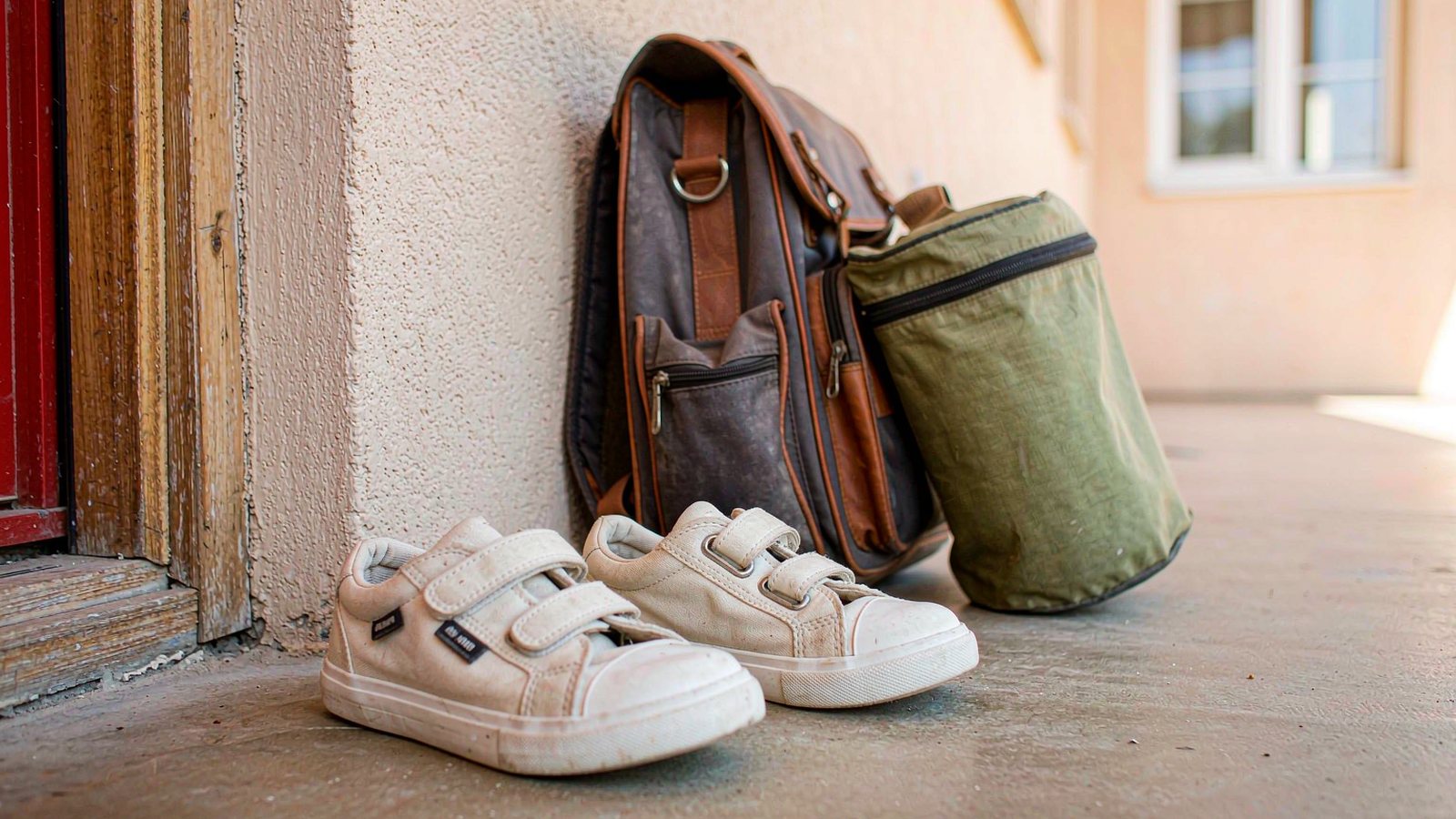
Top picks at a glance
Tap any pick to jump to the full breakdown, or use the link to check the current price.
| Pick | Best for | Check price |
|---|---|---|
| Stride Rite Made2Play Best overall school shoe | Everyday school wear for children who need a proper width fitting | Check price |
| KEEN Kids Chandler CNX Best toe protection | Children who wreck the front of every pair of shoes | Check price |
| Merrell Kids Moab 3 Best for outdoor and trail | Families whose children walk on grass, gravel and mud daily | Check price |
| New Balance Kids 680 Best value everyday shoe | Everyday wear and school PE for most children | Check price |
| Vans Kids Old Skool Best classic look | Older children who want a specific look and will not wear anything else | Check price |
| Crocs Kids Classic Clog Best for easy on and off | Garden, beach, changing rooms and backup pairs | Check price |
Children’s shoes are bought under pressure: term starts next week, the old pair has split across the toe, and the shop has three sizes left. That is exactly the moment when a pair gets bought on colour and outgrown or destroyed within a term.
A little attention to four things, well before the last weekend of the holidays, will get you a shoe that survives the year and fits properly while it does.
Why kids’ shoes fail early
Most children’s shoes do not wear out evenly. They fail in predictable places: the toe box, where playground surfaces and scooters make contact; the outsole under the ball of the foot, which flattens; and the upper, which splits where the shoe flexes. A shoe that protects the toe and has decent rubber under the ball will outlast a prettier one that does neither, regardless of price.
What actually matters when you choose
1. Growth room, and why more is not better
A thumb’s width of space at the front, around one centimetre, is the working rule. More than that and the shoe is unstable, so children grip with their toes to hold it on, which is worse for their feet than a slightly snug fit. Check the fit every six to eight weeks: children’s feet grow in bursts, and a shoe that fitted in September may be tight by November.
2. Toe protection and upper materials
A rubber bumper wrapping up over the front of the shoe is the single best durability feature you can look for, particularly for children who drag their feet. Leather holds up better at the toe than mesh, but fabric uppers tend to be lighter and washable. Reinforced stitching around the flex point helps, and a stitched toe overlay is more durable than a glued one.
3. Outsole rubber and flex
Look at where the rubber is and how thick it is under the ball of the foot, which is where the sole wears first. Deep lugs suit grass and gravel; smooth, shallow tread is better on tarmac and indoors. Flex the shoe in your hands: it should bend where the foot bends, at the ball, not in the middle of the arch. A stiff sole on a child’s shoe is a design fault, not a sign of quality.
4. Fastenings children can use themselves
Hook-and-loop straps are the practical choice for most primary-age children, because they can be tightened independently and there are no laces to trip over. Elastic bungee lacing works well until the cord stretches. Laces are fine once a child can tie them reliably, and they usually give the most secure fit for narrow feet. Whichever it is, the closure should hold the heel in place; if the heel lifts when the child walks, the fit is wrong.
5. Width fittings and the last
Children’s feet are widest at the front and grow lengthwise before they grow wider, so shoes built on a narrow last will pinch long before they are too short. Several brands publish multiple width fittings, and those are the ones worth seeking out if your child has broad feet or a high instep. A shoe that is too narrow will show wear on the outside edge and often causes children to complain about tightness within a week.
What we would not pay extra for
- Character licensing. It adds cost and nothing else structural.
- A fashion brand’s canvas shoe for daily school wear. It is a style purchase, not a work shoe.
- “Orthopaedic” claims without a specific design feature. Ask what the shoe actually does.
- A rigid, expensive shoe bought one size too big. It will be uncomfortable now and worn out when it finally fits.
How to check a fit in two minutes
- Press the front of the shoe with your thumb while the child stands; you want about a thumb’s width of space.
- Feel down the sides with a finger; the shoe should feel snug without bulging around the foot.
- Ask the child to walk away and back while you watch the heel; it should not slip up and down.
- Ask them to squat and stand, and watch whether the sole bends with the foot.
- Check both feet, since one is often slightly larger.
A quick buying checklist
- Measure both feet and buy for the larger one.
- Choose the width fitting before the size, then confirmed by the fit test above.
- Prioritise a reinforced toe and thick rubber under the ball of the foot.
- Pick a closure the child can manage alone.
- Check the return policy, and buy a fortnight before school starts so there is time to exchange.
- Confirm the current price at two retailers before ordering.
When to replace instead of repair
If the heel counter has collapsed, the midsole has gone flat, or the outsole is worn through under the ball, the shoe has stopped supporting the foot and is not worth repairing. Clean leather shoes can sometimes be re-glued at the toe, but the cost of a repair on a child’s shoe rarely makes sense when they may outgrow it in three months. Pass on lightly used wellies and dress shoes; do not pass on daily-worn school shoes that have moulded to another child’s foot.
How this guide was put together
This guide is based on published material and width specifications, manufacturer construction details, and consistent themes in parent and carer reports about durability after a term or two of use. We have not run wear testing or measured children’s feet, and we do not quote prices because they change constantly. Where we describe how a shoe holds up, we are summarising what owners consistently report. Always check the current price and the return window before buying.
Our picks in detail
Stride Rite
01 Stride Rite Made2Play
A machine-washable school shoe with a reinforced toe and a flexible sole, built on a range of width fittings rather than a single average. It is not the toughest shoe here, but it is the easiest to live with.
Best for: Everyday school wear for children who need a proper width fitting
- Machine washable upper with a reinforced toe bumper
- Published in medium, wide and extra-wide fittings
- Flexible rubber outsole with a rounded heel
- Adjustable closure, with hook-and-loop options on many styles
Pros
- Width fittings that actually accommodate broad feet
- Washable, which matters more than most parents expect
- Flexible sole suits running and playground use
Cons
- Washable fabric uppers wear through at the toe before leather would
- Available in fewer colour options than the large sneaker brands
We may earn a commission from this link. Learn more.
KEEN
02 KEEN Kids Chandler CNX
A rubber toe bumper wraps up over the front of the shoe, which is the single most effective defence against the damage kids do to the toe box. It is bulkier than a plain sneaker.
Best for: Children who wreck the front of every pair of shoes
- Rubber toe bumper wrapping over the front
- Bungee lacing with a single-pull adjustment
- Wide toe box with a roomy forefoot
- Non-marking rubber outsole
Pros
- Toe protection that survives playground surfaces
- Single-pull bungee lacing children can manage themselves
- Wide forefoot suits growing feet
Cons
- Bulkier and heavier than a fashion sneaker
- Bungee lacing can stretch with heavy use
We may earn a commission from this link. Learn more.
Merrell
03 Merrell Kids Moab 3
A scaled-down trail shoe with a leather and mesh upper and a proper lugged sole, built to the same pattern as the adult version. Overkill for a classroom, excellent for a school run that crosses fields.
Best for: Families whose children walk on grass, gravel and mud daily
- Leather and mesh upper with a protective toe cap
- Moulded rubber outsole with a lugged tread
- Cushioned midsole scaled for children
- Hook-and-loop closure on many versions
Pros
- Handles rough ground and wet grass
- Leather toe holds up far better than fabric
- Grip that works on slopes and slippery paths
Cons
- Heavier and warmer than a school sneaker
- Lugs wear quickly on tarmac
We may earn a commission from this link. Learn more.
New Balance
04 New Balance Kids 680
A straightforward cushioned sneaker with a leather upper and a simple hook-and-loop strap, sold in a broad range of sizes and widths. It is not indestructible, but it is easy to find and reasonably priced.
Best for: Everyday wear and school PE for most children
- Leather and mesh upper with a stitched toe overlay
- Cushioned EVA midsole
- Hook-and-loop strap closure
- Published in several widths including wide
Pros
- Cushioning that suits running and long days
- Wide sizing options at a mainstream price
- Easy for children to put on themselves
Cons
- Mesh panels scuff through on playgrounds
- Outsole is thin compared with a trail shoe
We may earn a commission from this link. Learn more.
Vans
05 Vans Kids Old Skool
A canvas and suede shoe on the brand's vulcanised waffle sole, with the classic side stripe. Hook-and-loop versions exist for younger children. Style first, durability third.
Best for: Older children who want a specific look and will not wear anything else
- Canvas and suede upper with a padded collar
- Vulcanised rubber outsole with a waffle tread
- Hook-and-loop versions available for smaller sizes
- Reinforced stitching at the ollie area
Pros
- Shape that suits narrow and average feet
- Grip that works well on smooth indoor floors
- Easy to wipe clean
Cons
- Thin sole wears flat faster than a cushioned sneaker
- Canvas tears at the toe with hard playground use
We may earn a commission from this link. Learn more.
Crocs
06 Crocs Kids Classic Clog
A moulded foam clog that a child can put on in two seconds, washable and light. It offers no toe protection and poor grip when wet, so it is a spare pair rather than a school shoe.
Best for: Garden, beach, changing rooms and backup pairs
- Moulded foam construction with ventilation ports
- Pivoting heel strap that converts to a slip-on
- Fully washable and quick drying
- Textured footbed
Pros
- Nothing to tie, buckle or break
- Rinses clean after mud or sand
- Very light and cheap
Cons
- No toe protection at all
- Slippery on wet smooth surfaces
We may earn a commission from this link. Learn more.
The bottom line
Our verdict
For most school-age children the Stride Rite Made2Play is the safest buy, because the width fittings give a genuinely correct fit and the shoe is machine washable, which extends its life more than thicker rubber. If your child destroys toe boxes, the KEEN Chandler is the fix. For families who walk on grass and gravel, the Merrell Moab is the only pair here built for it. Whatever you choose, check the fit monthly, because a shoe that has become too small wears out far faster than one that fits.
Frequently asked questions
How much room should I leave in a child's shoe?
Roughly a thumb's width, about one centimetre, between the longest toe and the front of the shoe. More than that and the shoe becomes a trip hazard and the child curls their toes to keep it on, which is worse than a snug fit. Check every six to eight weeks, since young children can outgrow a shoe in a single season.
How often should kids' shoes be replaced?
Children often need a new size every few months during growth spurts, and a daily-worn school shoe commonly needs replacing within a year even if it still fits. Replace based on the sole and the structure, not just the size: if the midsole has gone flat, the heel counter has collapsed, or the outsole is worn through, the shoe has stopped doing its job.
Are hand-me-down shoes a good idea?
Only if they are barely worn. A shoe moulds to the first child's foot, and a worn-out sole or collapsed heel counter will not support a second child properly. Lightly used dress shoes and well-kept wellies are reasonable to pass on; daily-worn school shoes generally are not.
Do children need arch support?
Most young children have flexible, flat-looking feet, which is a normal stage of development rather than a problem needing correction. A flexible shoe with a wide toe box and a reasonably flat insole is usually the right choice. If a child complains of pain, limps, or has a strong family history of foot problems, ask a podiatrist rather than buying an orthopaedic shoe.
Sources & further reading
- Stride Rite — official kids' shoe fit and width pages
- KEEN — official kids' footwear product pages
- Merrell — official kids' footwear product pages
Facts and availability last checked September 15, 2026.
Keep going
Related guides
 Shoes & Hats
 The Best Slippers for Cold Floors
Six slippers compared on sole type, lining, wool content and fit, for cold hardwood and tile floors, with honest notes on washing and lifespan.
 Shoes & Hats
 The Best Baseball Caps for Every Face Shape
Caps compared on crown structure, depth, brim curve, fabric and closure, with six real models and practical advice on matching a cap to your face and hairline.
 Shoes & Hats
 The Best Slides and Sandals for Summer
Slides, sport sandals and recovery footwear compared on footbed material, arch support, strap durability and wet grip, plus which ones suit long walks.