The Best Humidifiers for Dry Bedrooms and Winter Air
Cool mist, evaporative or warm mist, and what each does to hard water, dust and running costs. Six humidifiers for dry bedrooms and winter air.
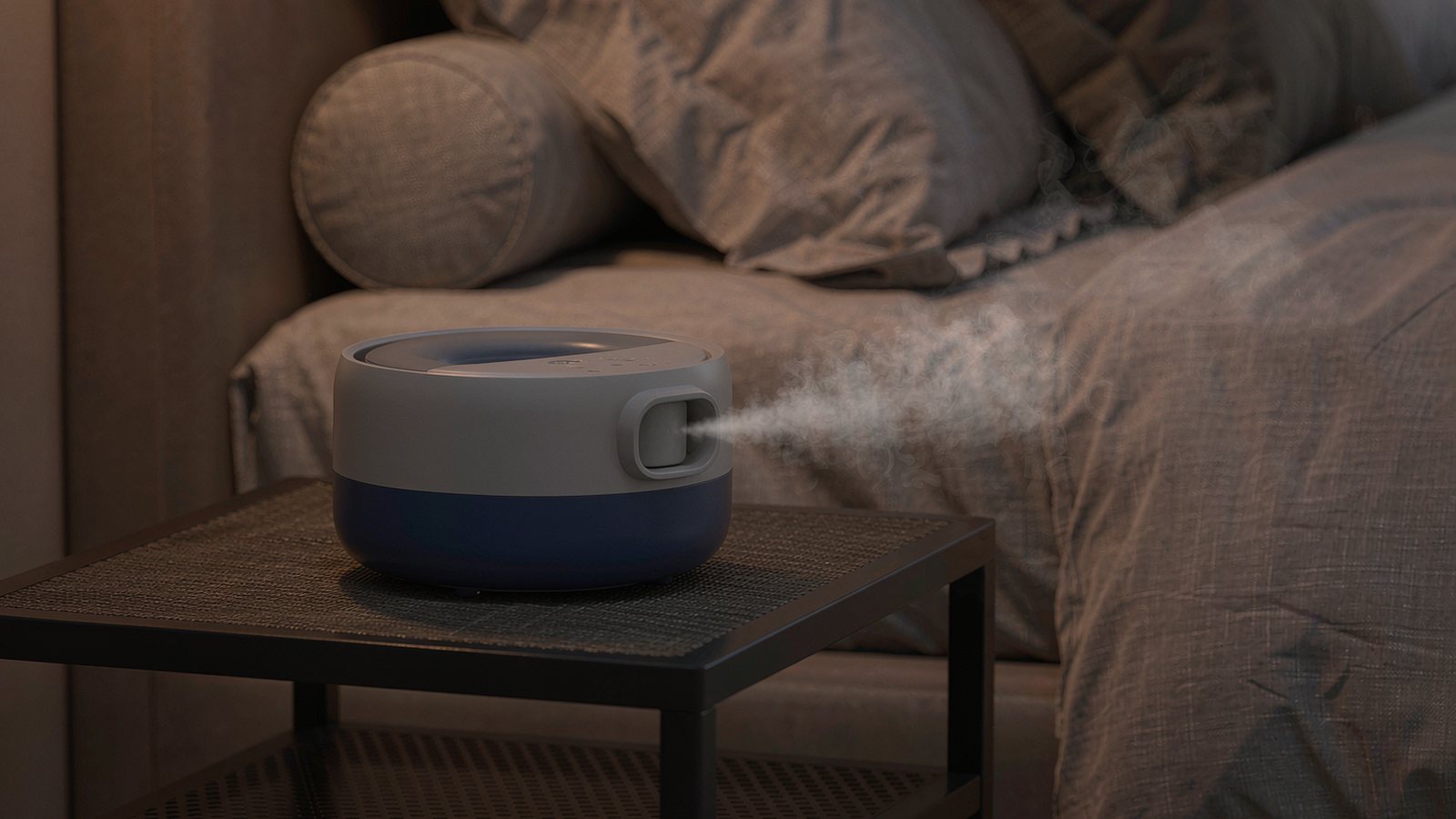
Top picks at a glance
Tap any pick to jump to the full breakdown, or use the link to check the current price.
| Pick | Best for | Check price |
|---|---|---|
| Levoit Classic 300S Humidifier Best overall | Bedrooms where noise matters more than anything else | Check price |
| Honeywell HCM-350 Germ Free Cool Mist Humidifier Best evaporative design | Hard-water homes, and anyone tired of dust settling on furniture | Check price |
| Vicks Warm Mist Humidifier Best warm mist | Cold bedrooms and anyone who finds cool mist uncomfortable | Check price |
| Crane Drop Ultrasonic Cool Mist Humidifier Best for a nursery | Nurseries and small bedrooms where a compact unit is enough | Check price |
| Canopy Humidifier Best for easy cleaning | Anyone who has thrown away a humidifier because it got slimy | Check price |
| AIRCARE MA1201 Evaporative Humidifier Best for a large room | Large bedrooms and open living areas that dry out all winter | Check price |
Heating a home in winter dries the air out, and a dry bedroom shows up as a scratchy throat, static shocks and skin that feels tight by morning. A humidifier fixes that, and then introduces a new set of problems if you buy the wrong type: white dust on every surface, a tank that grows biofilm within a week, or a machine loud enough that you turn it off at night.
The type of humidifier matters more than the brand, because the three designs behave differently in a hard-water home.
The three types and how they differ
Ultrasonic cool mist
A vibrating plate throws a fine mist into the air. These machines are very quiet and cheap to run, which is why they dominate the bedroom market. The catch is that whatever is dissolved in your water goes into the air too, so hard water leaves white mineral dust on furniture. They also need frequent rinsing.
Evaporative cool mist
A fan pulls air through a wet wicking filter, and water evaporates naturally. Minerals stay behind in the wick instead of landing on your shelves, and the physics self-limits the output as humidity rises. The costs are a fan you can hear and filters you replace.
Warm mist
The machine boils water and releases steam. Output is sterile, there is no mineral dust, and the warmth is welcome in a cold room. It uses more electricity than the alternatives, and the heating element scales up in hard water and needs descaling.
Running costs, not just the sticker price
The purchase price is the smallest part of owning a humidifier. Add up filters or wicks for a season, the electricity for a warm mist unit, and the water itself if you buy distilled to avoid white dust. An evaporative model that looks more expensive upfront can be cheaper than a cheap ultrasonic machine if you end up buying distilled water every week.
Tank size is the other practical number. A small tank on a nightstand means a refill at eleven at night and again before work. A larger tank is heavier to carry but gets you through the night.
Matching capacity to the room
Manufacturers describe coverage in room size terms, and those figures assume a closed room with typical ceiling height. A bedroom with the door open and a draughty window will need more output than the box suggests. For a single bedroom, a compact unit is usually enough. For a living area that opens into a kitchen, you want a console model with a large reservoir, and you should expect to hear it.
Placement matters too. Put a cool mist unit on a hard surface a little away from the wall and not directly under a shelf, or the mist will condense on the surface above it.
What we would not pay extra for
- Air purifier and humidifier combinations. They do different jobs, and combined units tend to do one of them poorly.
- Scented oils as a feature. Treat them as a bonus, not a reason to buy.
- Voice control. You will adjust the dial by hand.
- A larger tank than you can comfortably carry when full.
- Aromatherapy claims. Nothing about a humidifier treats illness, and medicated pads are comfort measures.
How to choose in ten minutes
- Check your water hardness. Hard water pushes you toward evaporative or warm mist, or toward buying distilled water.
- Pick the room and the run time. One bedroom with a full night of use needs a mid-size tank.
- Decide how much noise you can sleep through. Ultrasonic designs win here.
- Add up filter or wick costs for a winter before comparing prices.
- Choose a model you can clean properly, ideally with parts that go in a dishwasher.
- Check the current price and the return window, and buy a cheap hygrometer at the same time.
Who should not buy one
If your windows stream with condensation in the morning, your home is already humid enough and adding more moisture risks mould. If the real problem is dust or pollen, a humidifier will not help; that is an air purifier or better ventilation. And in a home with young children, a warm mist unit needs to be positioned where nobody can knock boiling water over.
How this guide was researched
This article is based on published specifications such as mist type, tank capacity, stated coverage and filter requirements, along with care instructions and the recurring themes in owner reviews after a full winter of use, where smells, leaks and scale build-up appear. We did not measure humidity output. Where we describe how a design behaves in hard water, we are describing the known physics of that method and consistent owner experience rather than our own testing. Prices and stock change, so every pick says check the current price.
Our picks in detail
Levoit
01 Levoit Classic 300S Humidifier
A quiet ultrasonic model with an auto mode and a humidity readout, which makes it easy to leave running overnight without overdoing it. It is an ultrasonic design, so it produces white dust if you fill it with hard tap water.
Best for: Bedrooms where noise matters more than anything else
- Ultrasonic cool mist with a large tank for overnight running
- Built-in humidistat with auto mode and a target humidity setting
- App and voice control on the smart version
- Top-fill design for easier refilling
Pros
- Very quiet at low output, which suits a bedroom
- Humidistat prevents the over-humidifying that causes condensation
- Top-fill tank is easier than flipping a full reservoir
Cons
- Produces white mineral dust with hard water
- Needs frequent rinsing to stay free of film
- App setup requires an account for full features
We may earn a commission from this link. Learn more.
Honeywell
02 Honeywell HCM-350 Germ Free Cool Mist Humidifier
An evaporative humidifier that pushes air through a wicking filter, so it releases water vapour rather than mineral dust. Filters are a running cost, and the fan is audible at higher settings.
Best for: Hard-water homes, and anyone tired of dust settling on furniture
- Evaporative wicking filter system
- UV treatment stage as described by the manufacturer
- Adjustable output with two speeds
- Removable tank and base for cleaning
Pros
- No white dust, because minerals stay in the filter
- Cannot easily over-humidify a room, since evaporation self-limits
- Simple, proven mechanism
Cons
- Replacement filters are a recurring cost
- Audible fan noise at the higher setting
- Wick can develop odour if left wet for days
We may earn a commission from this link. Learn more.
Vicks
03 Vicks Warm Mist Humidifier
A warm mist design that boils water and releases steam, so the output is sterile and there is no mineral dust. It uses more electricity than cool mist and the tank and heating element need regular descaling.
Best for: Cold bedrooms and anyone who finds cool mist uncomfortable
- Warm mist output produced by heating water
- Medicated vapour pad option for the scent compartment
- Adjustable output with a published tank capacity
- Auto shut-off when the tank empties
Pros
- No white dust and no filter to replace
- Adds a little warmth to a cold room
- Medicated pad slot is useful during a cold
Cons
- Uses noticeably more electricity than cool mist
- Heating element scales up in hard water and needs descaling
- Hot water and steam near a bedside needs care
We may earn a commission from this link. Learn more.
Crane
04 Crane Drop Ultrasonic Cool Mist Humidifier
A small, quiet cool mist humidifier in a range of animal shapes, sized for a single room. It is simple to use and easy to clean, and like all ultrasonic models it will dust a hard-water room.
Best for: Nurseries and small bedrooms where a compact unit is enough
- Ultrasonic cool mist with a compact tank
- Variable output dial rather than digital controls
- Directional mist nozzle
- Dishwasher-safe tank and base on most models
Pros
- Very quiet and small enough for a nightstand
- Few parts, so cleaning is quick
- Shape and colour options that suit a child's room
Cons
- Small tank means more frequent refills
- Produces white dust with hard water
- No humidistat, so output is judged by feel
We may earn a commission from this link. Learn more.
Canopy
05 Canopy Humidifier
A design built around parts that can go in the dishwasher, which addresses the main reason humidifiers get abandoned. The tradeoff is filter replacements and a higher upfront price.
Best for: Anyone who has thrown away a humidifier because it got slimy
- Dishwasher-safe components designed for regular washing
- Replaceable paper filter that traps minerals
- Optional scent and humidistat accessories
- Compact footprint for a nightstand
Pros
- Genuinely easier to keep clean than most designs
- Reduces white dust because the filter captures minerals
- Small and quiet in a bedroom
Cons
- Filters are a recurring cost
- Small output suits a single room only
- Premium price for the capacity
We may earn a commission from this link. Learn more.
AIRCARE
06 AIRCARE MA1201 Evaporative Humidifier
A console evaporative humidifier with a big tank that runs for a long stretch between refills, aimed at open-plan spaces rather than nightstands. It is bulky, and it is the loudest thing on this list.
Best for: Large bedrooms and open living areas that dry out all winter
- Evaporative wicking system with a large water capacity
- Digital humidistat with adjustable output
- Multiple fan speeds including a quiet night setting
- Replacement wicks sold separately
Pros
- Handles a large room without constant refilling
- No white dust because the minerals stay in the wick
- Humidistat keeps the level stable
Cons
- Physically large, needs floor space and a wall socket
- Noticeable fan noise away from the lowest setting
- Wicks need replacing through the season
We may earn a commission from this link. Learn more.
The bottom line
Our verdict
For a bedroom, the Levoit Classic 300S is the easiest recommendation: the humidistat stops you from over-humidifying, it runs quietly enough to sleep through, and the top-fill tank means you will actually keep it topped up. If your water is hard and white dust is the thing that bothers you most, choose the Honeywell evaporative model and accept the filter cost, or the Canopy if you want dishwasher-safe parts. The console unit is the right answer only for a genuinely large room. Check the current price and factor in filters or wicks, because the running cost is where these machines differ most.
Frequently asked questions
What humidity should I aim for in a bedroom?
Most guidance for indoor air sits somewhere around thirty to fifty percent relative humidity. Below that, dry air irritates throats and skin; above it, condensation forms on windows and mould has an easier time. A humidifier with a humidistat or a cheap separate hygrometer takes the guesswork out of it.
Why is white dust appearing on my furniture?
That is mineral dust from ultrasonic humidifiers running on hard water. The ultrasonic plate throws dissolved minerals into the air along with the water, and they settle as a fine white powder. Using distilled water or switching to an evaporative or warm mist design solves it.
How often do I need to clean a humidifier?
The tank should be rinsed and left to dry regularly, and a proper clean with a mild disinfecting routine roughly weekly during heavy use. Standing water at room temperature grows biofilm quickly, which is the main reason humidifiers start to smell. Dishwasher-safe designs make this much less of a chore.
Do I need a filter or is that an upsell?
Evaporative humidifiers genuinely need wicks, which trap minerals and eventually clog, so filters are a real running cost. Ultrasonic and warm mist designs usually have no filter, but they need water with fewer dissolved minerals or more frequent descaling.
Sources & further reading
- Levoit — official humidifier product and specification page
- Honeywell — official cool mist humidifier product page
- Crane — official drop shape humidifier product page
Facts and availability last checked September 15, 2026.
Keep going
Related guides
 Home
Home The Best Air Fryers for Two-Person Households
Basket size, footprint and cleaning effort decide whether an air fryer earns its counter. Six models sized for two people, from compact to oven-style.
 Home
Home The Best Blenders for Daily Smoothies and Small Counters
Motor wattage, jar material and blade design decide how a blender handles frozen fruit. Six blenders that suit a smoothie habit and a tight kitchen.
 Home
Home The Best Standing Desks for a Small Home Office
Stability, desktop depth and assembly effort matter more than lift speed. Here is how to pick a height-adjustable desk that fits a small home office.