The Best Coffee Makers for Small Kitchens
Six coffee makers that earn their counter space in a tight kitchen, plus how to judge brew temperature, carafe design and daily cleaning effort.
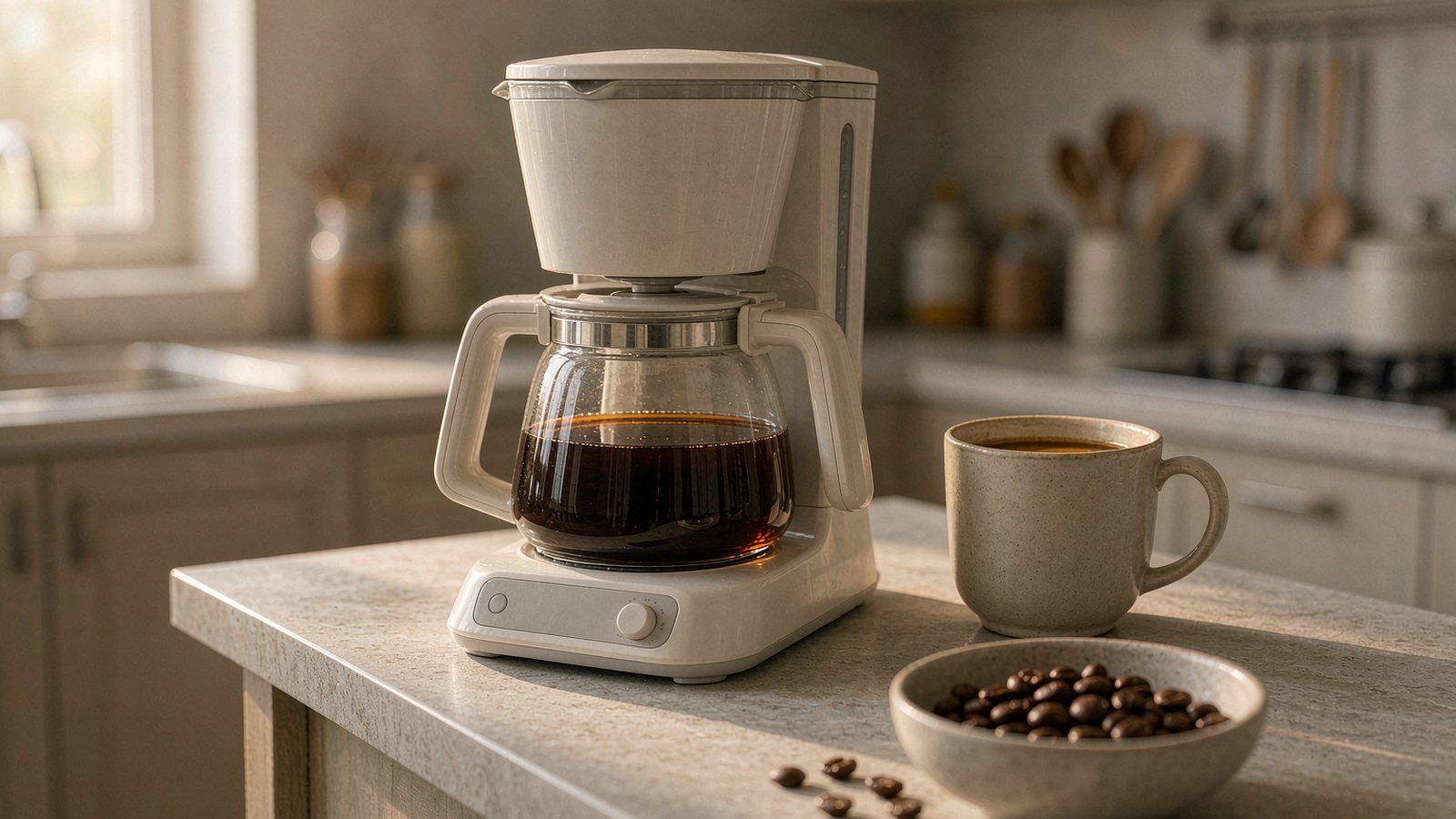
Top picks at a glance
Tap any pick to jump to the full breakdown, or use the link to check the current price.
| Pick | Best for | Check price |
|---|---|---|
| Technivorm Moccamaster KBGV Select Best overall | Anyone who drinks filter coffee daily and wants one machine to last a decade | Check price |
| OXO Brew 8-Cup Coffee Maker Best value | Households of two who want good filter coffee without a large outlay | Check price |
| Bonavita Connoisseur 8-Cup Coffee Brewer Best no-fuss brewer | People who want a machine with nothing to configure | Check price |
| Keurig K-Mini Single Serve Coffee Maker Best for very small counters | Studio apartments, offices and anyone who drinks exactly one cup | Check price |
| Mr. Coffee 5-Cup Mini Brew Switch Coffee Maker Best budget | Spare rooms, small households and anyone who wants a cheap second machine | Check price |
| AeroPress Original Coffee Maker Best when counter space is zero | Tiny kitchens, travellers and anyone who wants one excellent cup | Check price |
In a small kitchen the coffee maker has to compete for the same eighteen inches of counter as the toaster, the kettle and whatever you keep meaning to put away. That changes the brief. You are no longer choosing the best brewer in the abstract, you are choosing the one that deserves permanent residency in the one spot you have left.
This roundup is ordered around how much space each machine takes and how much work it needs, rather than around which one produces the finest cup in ideal conditions.
Start with the space, not the brew
Measure three things before anything else: the width of the free counter, the depth from the wall to the edge, and the height from the counter to the underside of the wall cabinets. A machine that fits the first two but not the third is the most common mistake people make, because tall brewers look compact from the front in product photos.
Then decide whether the machine lives out permanently. If it does not, a manual brewer that stores in a drawer may beat a better machine that you resent every morning.
What separates a good brewer from a cheap one
Brew temperature and consistency
The published temperature range used by specialty coffee bodies exists for a reason: water that is too cool under-extracts and gives you a sour, thin cup. Inexpensive machines often start hot and finish cool over a full batch, which is why the last cup from a cheap pot tastes worse than the first. Machines that hold temperature through the brew are worth paying for if you drink a full carafe.
Carafe design and how the coffee is held
A hotplate is convenient and slowly ruins coffee. A thermal carafe keeps it drinkable for longer but needs preheating to hold heat well. Neither is wrong; just match it to whether you drink the pot within twenty minutes or nurse it across a morning.
How much cleaning it demands
Baskets with a swing-out drawer are easier than fixed ones. Wide carafe mouths are easier than narrow. Anything with a small permanent reservoir needs regular descaling. In a small kitchen a fiddly machine is worse than elsewhere, because you cannot spread out.
Pod or ground?
Pods buy speed and consistency at a higher cost per cup and with plastic waste. Ground coffee is cheaper and lets you control the result but needs a grinder and a few seconds of attention. In a small kitchen this is often the real decision.
What we would not pay extra for
- Built-in grinders. They add bulk, noise and a cleaning job, and a separate burr grinder generally does better work.
- App control and Wi-Fi. You will schedule the machine twice and then never open the app again.
- Milk frothing attachments. They rarely steam well and they take up the space you were trying to save.
- A twelve-cup capacity in a two-person kitchen. You will brew four cups and waste the rest.
- Stainless-look plastic. It shows fingerprints and does not improve the coffee.
How to choose in ten minutes
- Measure the gap under your cabinets and note the height. This eliminates more machines than any other criterion.
- Count cups per morning, then buy for that number rather than for guests.
- Choose pod or ground coffee, since that decision determines the machine class.
- Decide thermal carafe or hotplate based on how long the pot sits.
- Check whether you can descale and clean it without dismantling anything awkward.
- Check the current price and confirm the return window, because a brewer that does not fit is a return, not a repair.
When the right answer is no machine
If you drink one cup a day and your counter is genuinely full, a pour-over cone and a kettle cost very little, take almost no space and make an excellent cup. If you already own a decent kettle, that is often the better purchase than a compact machine with a plastic reservoir. Machines earn their place when you brew for more than one person, when you want the process to be a single button, or when you need coffee to be ready before you are awake enough to make it.
A note on how this guide was put together
No laboratory was involved. This roundup is built from manufacturer specification sheets, published brewing temperature guidance from coffee industry bodies, user manuals and consistent themes in owner reports written well after purchase, where carafe leaks and reservoir smells tend to surface. Where we describe a machine as running cooler or holding heat less well, that reflects published specs and owner experience rather than a measurement we made ourselves. Prices and stock change constantly, so each pick says check the current price.
Our picks in detail
Technivorm
01 Technivorm Moccamaster KBGV Select
A hand-built Dutch drip machine that hits the published brewing temperature range coffee bodies recommend and is nearly all metal and glass. It is expensive, and the footprint is taller than it looks in photos.
Best for: Anyone who drinks filter coffee daily and wants one machine to last a decade
- Copper boiling element that brings water to the published brewing range
- Independent hotplate control with a selectable half or full carafe mode
- Glass carafe with a mixing chamber lid
- Replaceable parts and a long published warranty period
Pros
- Consistent extraction that holds up against much pricier machines
- Simple mechanics with few failure points
- Spare carafes and parts are easy to source
Cons
- The most expensive drip machine here and it has no timer or app
- Tall body needs headroom under wall cabinets
- Glass carafe is breakable
We may earn a commission from this link. Learn more.
OXO
02 OXO Brew 8-Cup Coffee Maker
A thoughtful design with a showerhead that wets the whole bed of grounds and a carafe that pours without dribbling. It brews a little cooler at the end of a full batch than the Moccamaster, which is the main technical compromise.
Best for: Households of two who want good filter coffee without a large outlay
- Showerhead dispersion for even saturation of the grounds
- Thermal carafe option that keeps coffee hot without a hotplate
- Single-cup mode for smaller brews
- Published brew temperature range displayed on the machine
Pros
- Well-designed spout and handle on the carafe
- Thermal version means no burnt coffee sitting on a plate
- Compact enough for a narrow counter
Cons
- Thermal carafe needs preheating to stay hot for long
- Plastic water reservoir can hold onto odours over time
We may earn a commission from this link. Learn more.
Bonavita
03 Bonavita Connoisseur 8-Cup Coffee Brewer
One switch, one thermal carafe, no programming. The simplicity is the point and also the limitation: there is no timer, so you cannot wake up to a finished pot.
Best for: People who want a machine with nothing to configure
- Published brewing temperature range consistent with specialty coffee guidance
- Pre-infusion pause before the main brew cycle
- Stainless thermal carafe
- Single control for power
Pros
- Few settings means few things to break or misconfigure
- Pre-infusion improves extraction on fresh grounds
- Thermal carafe travels to the table
Cons
- No programmable timer
- Carafe mouth is narrow to clean by hand
- Plastic housing looks basic for the price
We may earn a commission from this link. Learn more.
Keurig
04 Keurig K-Mini Single Serve Coffee Maker
Barely wider than a mug, which is exactly the point in a studio kitchen. The tradeoffs are real: one cup per brew, a cord that must be unplugged, and pod costs that add up faster than ground coffee.
Best for: Studio apartments, offices and anyone who drinks exactly one cup
- Slim body designed to fit tight counters
- Brews a single cup into a travel mug
- Removable drip tray for taller cups
- Descaler and reusable filter options available
Pros
- Smallest permanent footprint of anything here
- No learning curve at all
- Easy to store in a cupboard between uses
Cons
- Cost per cup is higher than filter coffee
- Water reservoir must be refilled for each brew
- Pod waste is a genuine environmental cost
We may earn a commission from this link. Learn more.
Mr. Coffee
05 Mr. Coffee 5-Cup Mini Brew Switch Coffee Maker
A small drip machine with a simple switch and a glass carafe, sold at a price that makes it almost disposable. Brew temperature and build quality are the obvious places the money was saved.
Best for: Spare rooms, small households and anyone who wants a cheap second machine
- Five-cup glass carafe with measurement markings
- Simple on and off switch with an indicator light
- Warming plate to hold temperature after brewing
- Compact body for narrow counters
Pros
- Very cheap to buy and easy to replace
- Small enough to keep in a cabinet
- Nothing to program or clean beyond the basket
Cons
- Warming plate stews coffee if it sits more than a short while
- Plastic parts feel light and can crack near the hinge
- Carafe lid is fiddly to seat properly
We may earn a commission from this link. Learn more.
AeroPress
06 AeroPress Original Coffee Maker
Not a machine at all: a manual press that lives in a drawer and brews one strong cup in a couple of minutes. It rewards a decent grinder and punishes rushing, but nothing else on this list packs away as completely.
Best for: Tiny kitchens, travellers and anyone who wants one excellent cup
- Manual press with a paper micro-filter
- Brews directly into a mug or a carafe
- Rinses clean under the tap in seconds
- Packs into a small pouch for travel
Pros
- Takes up no permanent counter space
- Very forgiving of grind inconsistency
- Cheap to own and almost impossible to break
Cons
- One or two cups at a time, so it does not scale to guests
- Involved enough that it is a morning ritual, not a convenience
- Needs a kettle and a grinder to do its best work
We may earn a commission from this link. Learn more.
The bottom line
Our verdict
If filter coffee is a daily habit and the kitchen is small but has one tall corner, the Moccamaster KBGV Select is the machine to buy: it brews to the temperature range specialty coffee bodies recommend, it has almost nothing to fail, and parts stay available. For most two-person households the OXO Brew 8-Cup is the more sensible spend, especially in its thermal carafe version. If your counter holds literally nothing, the AeroPress is the honest answer, and the Keurig K-Mini is the right choice only if convenience matters more than cost per cup. Check the current price and measure the height of the space under your cabinets before ordering.
Frequently asked questions
Does brew temperature really change how coffee tastes?
Yes. Coffee bodies such as the Specialty Coffee Association publish a recommended brewing range, and machines that stay inside it extract more evenly than cheap brewers that run cooler. A sour, weak cup from a budget machine is often a temperature problem rather than a bean problem.
Is a thermal carafe better than a hotplate?
For most people, yes. A hotplate keeps heating coffee that has already brewed, which accelerates the stale, scorched taste. A thermal carafe holds the temperature without cooking the coffee further, though it should be preheated with hot water to perform at its best.
How often should I descale a coffee maker?
It depends on water hardness. If you see white scale in the reservoir or the brew slows noticeably, it is overdue. In hard-water areas this can happen within a couple of months, so it is worth checking the manual for the manufacturer's descaling instructions rather than guessing.
Do I need a grinder as well?
A burr grinder improves any of these machines more than upgrading the machine would. Pre-ground coffee goes stale quickly once opened, so fresh grinding is usually the single biggest change you can make to the cup.
Sources & further reading
- Technivorm Moccamaster — official product and specification page
- OXO — official coffee maker product page
- Keurig — official single serve brewer page
Facts and availability last checked September 15, 2026.
Keep going
Related guides
 Home
Home The Best Air Fryers for Two-Person Households
Basket size, footprint and cleaning effort decide whether an air fryer earns its counter. Six models sized for two people, from compact to oven-style.
 Home
Home The Best Blenders for Daily Smoothies and Small Counters
Motor wattage, jar material and blade design decide how a blender handles frozen fruit. Six blenders that suit a smoothie habit and a tight kitchen.
 Home
Home The Best Standing Desks for a Small Home Office
Stability, desktop depth and assembly effort matter more than lift speed. Here is how to pick a height-adjustable desk that fits a small home office.